
Staging Your Home: 10 Easy Steps for Quick Sales
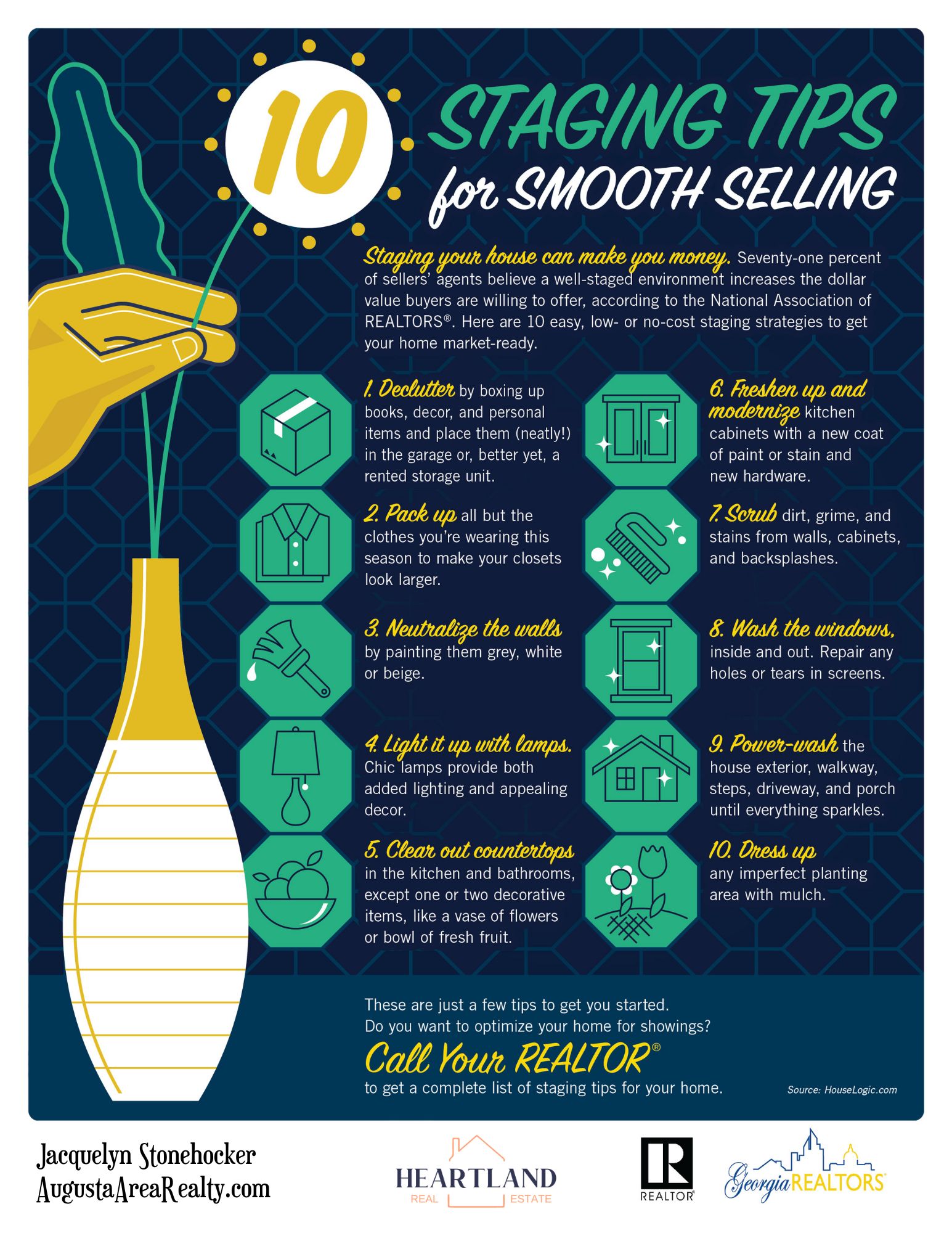
Staging your house can make you money! According to the National Association of REALTORS®, seventy-one percent of sellers’ agents believe a well-staged environment increases the dollar value. Buyers are willing to offer more. Here are 10 easy, low- or no-cost strategies to get your home market-ready:
1. Declutter: Box up books, decor, and personal items and place them (neatly!) in the garage or, better yet, a rented storage unit.
2. Pack up: Pack up all but the clothes you’re wearing this season to make your closets look larger.
3. Neutralize: Neutralize the walls by painting them grey, white, or beige.
4. Light it up: Chic lamps provide both added lighting and appealing decor.
5. Clear out: Clear out countertops in the kitchen and bathrooms. Leave only one or two decorative items, like a vase of flowers or a bowl of fresh fruit.
6. Freshen up: Freshen up and modernize kitchen cabinets with a new coat of paint or stain and new hardware.
7. Scrub clean: Scrub dirt, grime, and stains from walls, cabinets, and backsplashes.
8. Wash windows: Wash the windows inside and out. Repair any holes or tears in screens.
9. Power-wash: Power-wash the house exterior, walkway, steps, driveway, and porch until everything sparkles.
10. Dress up: Dress up any imperfect planting area with mulch.
These are just a few tips to get you started. Do you want to optimize your home for showings? Call your REALTOR® to get a complete list of staging tips for your home.
Additional Points to Consider:
- Curb Appeal: First impressions are crucial. Make sure your front yard is well-maintained with fresh landscaping and a welcoming entrance.
- Depersonalize: While you want your home to feel inviting, avoid overly personal touches that might distract potential buyers.
- Stage for Your Target Audience: Think about who your ideal buyer might be and stage your home accordingly. For example, if you’re targeting young families, consider staging a spare bedroom as a nursery.
- Don’t Over-stage: Too much staging can make a home feel cluttered and impersonal. Keep it simple and let the natural beauty of your home shine through.
By following these tips, you can create a welcoming and appealing environment. Working with your REALTOR® will help you sell your home quickly and for the best possible price.


Essential Steps for Mortgage Pre-Approval
If you’re serious about buying a home, getting pre-approved for a mortgage is a crucial step. It’s also a tedious one. Lenders seem to want a mountain of documents. Yet the payoff is worth it. Most agents recommend mortgage pre-approval because it strengthens your offer. Sellers like to know the buyer already has financing secured.
Below is a checklist of all the items you will need for a conventional loan.
1. Identification
(one of these, which you will need to show in person)
- Driver’s license
- Passport
- Other state- or federal-issued ID
2. Income
- Pay stubs for the last 30 days
- Last two federal tax returns
- Last two W-2s
- Proof of any additional income (second jobs, social security, alimony, etc.)
3. Accounts
- Last two statements on all bank accounts – be sure to include all pages, even blank ones
- Statements for all investment and/or retirement accounts
4. Property
- Settlement statement from previous home sale, if applicable
5. Additional Documents
- Contact information for your landlord(s) for the last two years, if applicable
- Divorce decree, separation agreement, and/or property settlement agreement, if applicable
- Gift letter if a family member is helping with down payment (lender will have form)
- A letter of explanation (LOE) for late payments, collections, judgments, or other derogatory items in your credit history, if applicable
A conventional loan is just one option. Other loans include VA, USDA, and FHA. CONTACT YOUR REALTOR® to discuss which of these may be the best option for you.
Remember, pre-approval is just one step in the home-buying process. It’s important to work with a qualified real estate agent to help you navigate the entire process.
Contact: Jacquelyn Stonehocker (706) 251-7315 | (470) 655-1976 HEARTLAND REAL ESTATE


4 Strategies for Selling Your Home with Competing Offers
The housing market is hotter than ever, and that’s great news for sellers. In this market, it’s possible you may be faced with multiple competing offers to purchase your property. Below are four options that you have to navigate this situation.
1. Accept the “Best” Offer: This is the simplest option. However, it’s important to carefully consider all the terms of each offer. Don’t just look at the price. Look at things like financing, contingencies, and closing dates.
2. Counter One Offer and Reject the Rest: This is a good option. Choose this if you have one offer that is clearly superior to the others. However, you risk losing all your offers. This can happen if the person you counter with decides to walk away.
3. Counter One Offer While Putting Others on Hold: This is a good option. It works well if you have one offer that you’re seriously considering. It allows you to keep your options open. However, you need to be upfront with the other potential buyers about what you’re doing.
4. Inform All Potential Purchasers and Invite a Bidding War: This is a risky option. However, it can sometimes lead to a higher price. However, it’s important to be prepared for the possibility that no one will increase their offer.
Juggling multiple offers and the myriad of details they contain can be tricky. Team up with a REALTOR® to ensure that you manage the process carefully. This will help you achieve the best price and conditions for the sale of your home. It also ensures that all parties involved are treated fairly.
Jacquelyn Stonehocker AugustaAreaRealty.com
HEARTLAND REAL ESTATE
REALTOR® Georgia REALTORS®
Additional Points to Consider:
- Don’t be afraid to walk away: If you’re not happy with any of the offers, you don’t have to accept any of them.
- Get everything in writing: Once you’ve accepted an offer, be sure to get everything in writing. This will help to protect you in case there are any problems down the road.
- Work with a trusted attorney: An attorney can help you review the contract and make sure that you’re protected.
Selling your home can be a complex process. However, by working with a REALTOR® and using these tips, you can increase your chances of getting the best possible price for your property.

Why You Need A Realtor: Services Explained
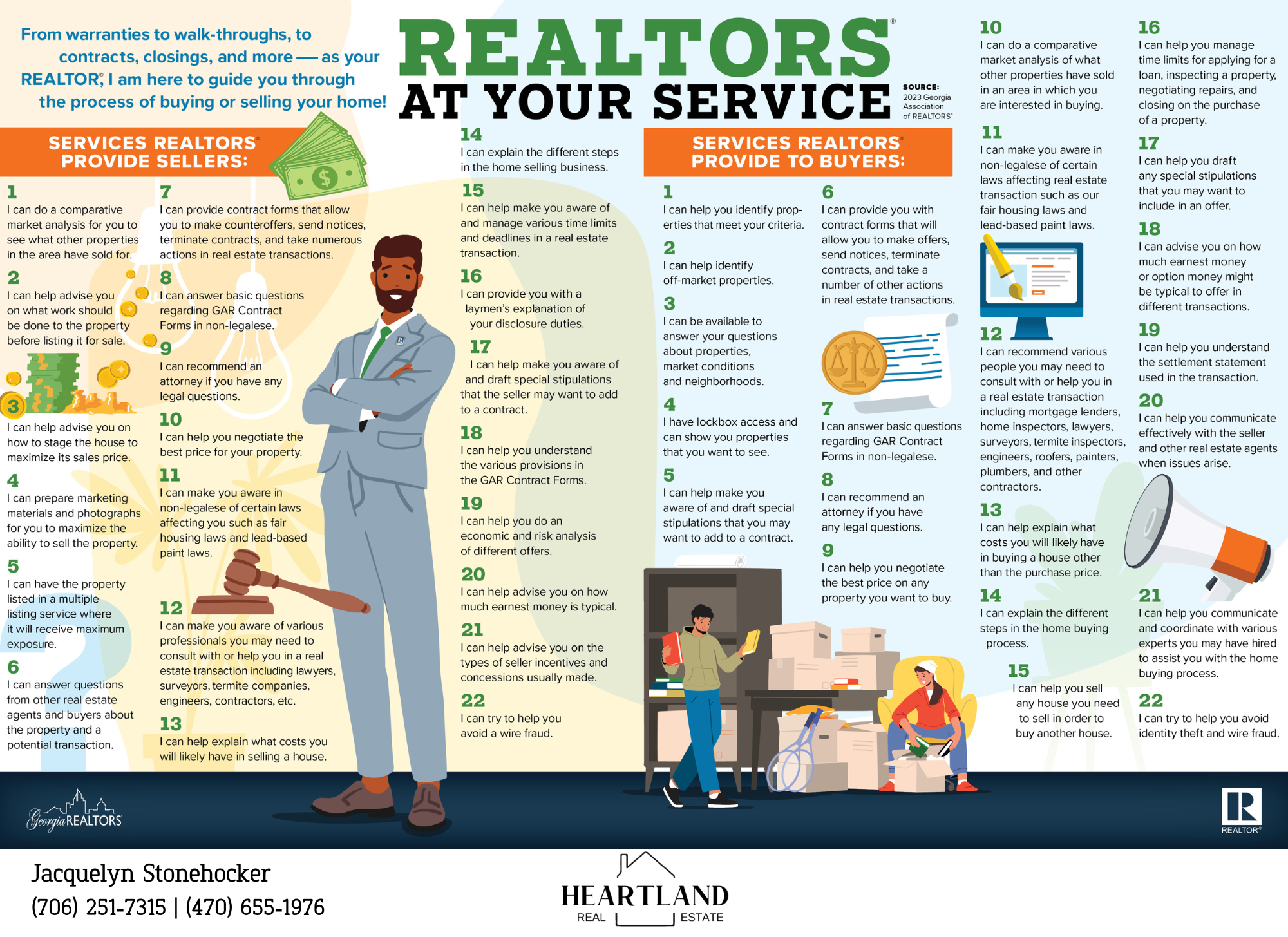
Thinking about buying or selling a home? A REALTOR® is your go-to expert to guide you through the entire process. They offer a wide range of services to ensure a smooth and successful transaction.
Key Services Provided by REALTORS®
- Market Analysis: Realtors can analyze the current market conditions. They can help you determine the best listing price for your home. They can also guide you on the right offer for a property you’re interested in buying.
- Property Listing: If you’re selling, your REALTOR® can help you prepare your home for sale. They will market it effectively. They also negotiate with potential buyers.
- Buyer Representation: If you’re buying, your REALTOR® will help you find properties that match your criteria. They will also schedule showings. Additionally, they will negotiate the best deal on your behalf.
- Contract Negotiation: Realtors are skilled negotiators. They can help you navigate the complex legal documents. They ensure your interests are protected.
- Home Inspection Guidance: Your realtor can recommend qualified home inspectors and help you understand the inspection report.
- Closing Assistance: Realtors can assist with the closing process. They ensure all paperwork is in order. The transaction is completed on time.
Additional Services:
- Access to MLS: Realtors have access to the Multiple Listing Service (MLS), a database of properties for sale. This gives you access to a wider range of listings.
- Professional Networking: Realtors have a vast network of professionals. This includes mortgage lenders, attorneys, and contractors. They can help you with various aspects of the home buying or selling process.
- Local Market Knowledge: Realtors are experts on local market trends, neighborhoods, and school districts. They can provide valuable insights to help you make informed decisions.
Why Choose a REALTOR®?
- Expertise: Realtors are trained professionals with in-depth knowledge of real estate laws, regulations, and best practices.
- Negotiation Skills: They are skilled negotiators who can help you get the best possible deal.
- Market Insights: They can provide valuable insights into market trends and pricing strategies.
- Time-Saving: Realtors can save you time and stress. They handle many of the details involved in buying or selling a home.
Ready to Get Started?
If you’re considering buying or selling a home, partnering with a REALTOR® is a wise decision. They can provide the guidance and support you need to achieve your real estate goals.
Contact a REALTOR® today to learn more about how they can help you.
Opens in a new windowwww.incharge.org
Jacquelyn Stonehocker
(706) 251-7315

Top 3 Home Selling Myths You Should Ignore
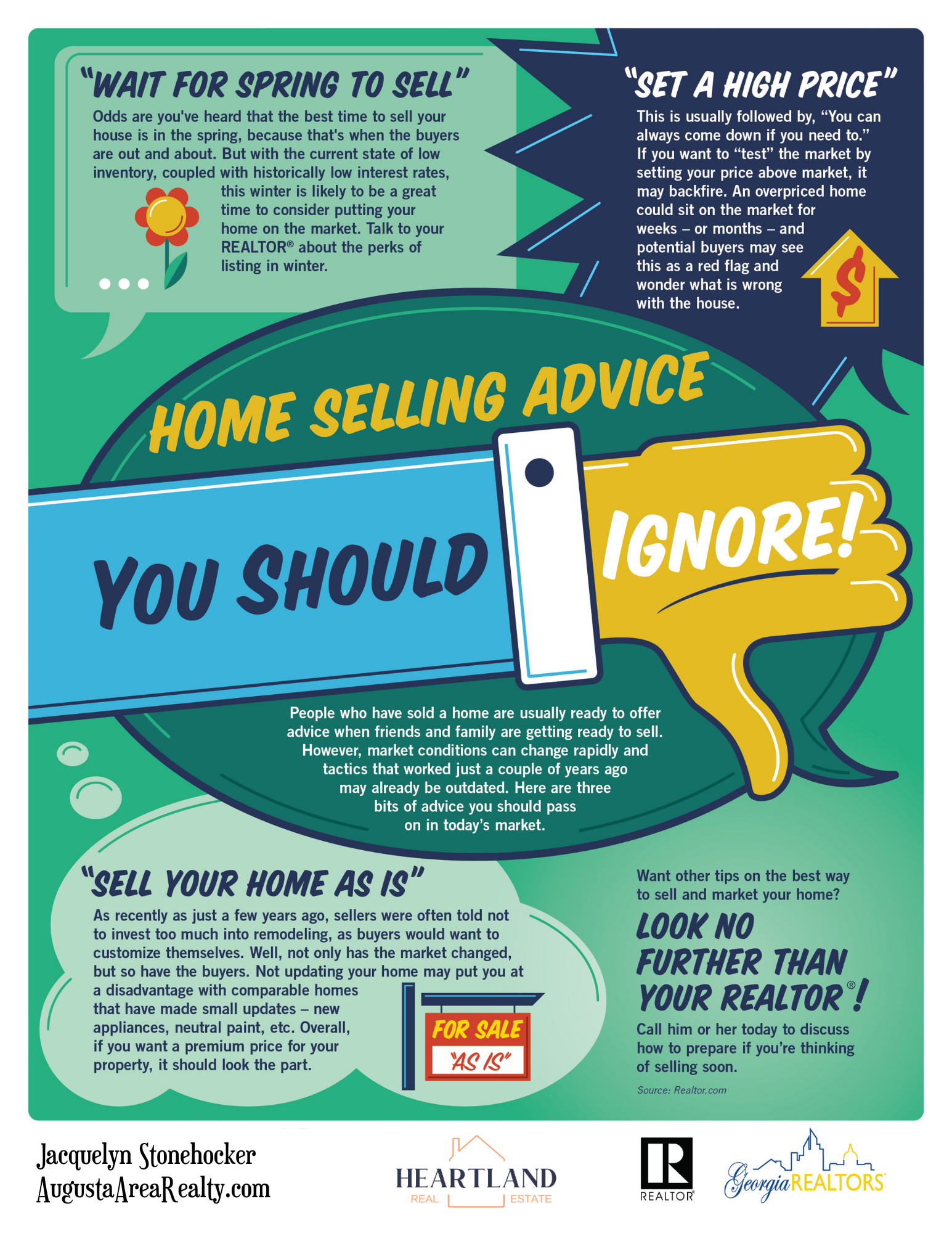
Thinking of selling your home? You’ve likely heard some common advice floating around, but not all of it is true anymore! The real estate market is constantly changing, and some old-school strategies might actually hurt your chances of a successful sale.
Here are three outdated home selling myths you should ignore:
1. “Wait for Spring to Sell”
Spring is often touted as the best time to sell, but that’s not always the case. With low inventory and historically low interest rates, winter can actually be a great time to list your property. Fewer sellers mean less competition for buyers, which could lead to a faster sale and potentially a higher price.
2. “Set a High Price and Negotiate Down”
This “testing the market” strategy can backfire. An overpriced home sits on the market longer, deterring potential buyers who might wonder what’s wrong with it. It’s better to price your home competitively from the start to attract serious buyers.
3. “Sell Your Home As-Is”
While it was once common to avoid major renovations before selling, today’s buyers expect move-in ready homes. Small updates like fresh paint, new appliances, and minor cosmetic improvements can make a big difference in attracting buyers and commanding a higher price.
So, who should you listen to?
Your Realtor! They are your best resource for up-to-date market knowledge and expert advice on selling your home. They can help you:
- Price your home correctly
- Stage your home to show its best features
- Market your home effectively
- Negotiate with buyers
If you’re thinking of selling, don’t rely on outdated advice. Contact a Realtor today for expert guidance and a successful sale!
Disclaimer: This blog post is for informational purposes only and should not be considered financial or legal advice.
I hope this helps!

Top 4 Questions to Ask Your REALTOR® When Buying a Home
Four Questions to Ask Your REALTOR® When Buying a Home
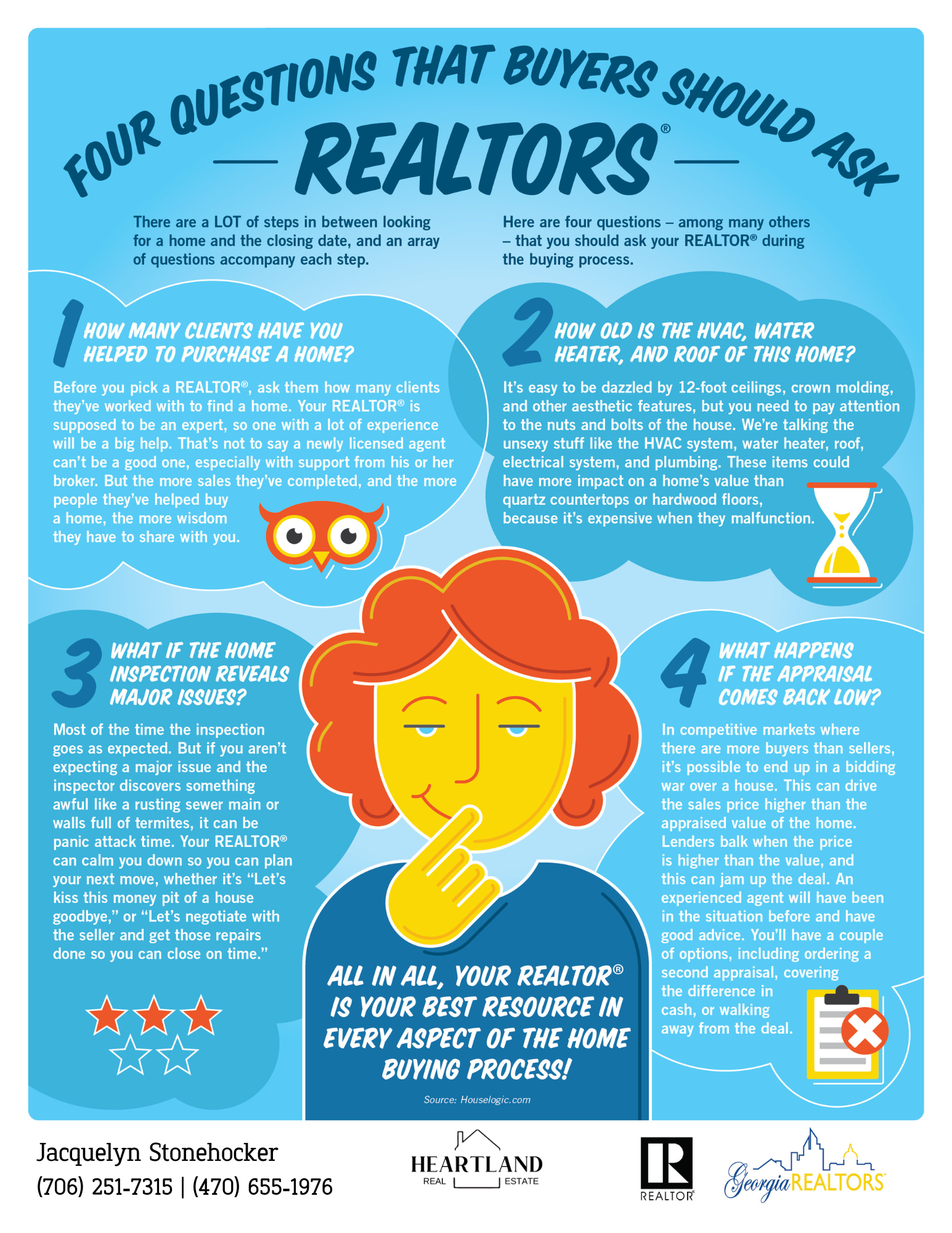
Buying a home is a big decision, and there are a lot of steps involved. It’s important to ask your REALTOR® questions throughout the process to make sure you’re making informed decisions. Here are four questions you should ask your REALTOR® when buying a home:
1. How many clients have you helped to purchase a home?
Your REALTOR® should be an expert in the home buying process. Ask them how many clients they’ve helped to purchase a home. This will give you an idea of their experience and knowledge.
2. How old is the HVAC, water heater, and roof of this home?
It’s easy to be dazzled by the aesthetic features of a home. However, it’s important to pay attention to the nuts and bolts. Ask your REALTOR® about the age of the HVAC, water heater, and roof. These items can be expensive to replace, so it’s important to know their condition.
3. What if the home inspection reveals major issues?
Most of the time, home inspections go as expected. However, it’s important to be prepared for the possibility of major issues. Ask your REALTOR® what would happen if the inspection reveals major issues. Would you be able to negotiate with the seller for repairs? Or would you need to walk away from the deal?
4. What happens if the appraisal comes back low?
In competitive markets, it’s possible for the sales price of a home to be higher than its appraised value. This can be a problem because lenders typically won’t lend more than the appraised value of a home. Ask your REALTOR® what would happen if the appraisal comes back low. Would you need to come up with the difference in cash? Or would you need to walk away from the deal?
Your REALTOR® is your best resource throughout the home buying process. Don’t be afraid to ask them questions. They’re there to help you!
Additional Information
Here are a few other questions you may want to ask your REALTOR®:
- What is the average sale price of homes in this area?
- How long have homes been on the market in this area?
- What is the current inventory of homes for sale in this area?
- What are the closing costs associated with buying a home in this area?
- What are the property taxes in this area?
- What are the homeowner’s association fees in this area?
- What are the schools like in this area?
- What are the crime rates in this area?
- What are the amenities in this area?
- What are the transportation options in this area?
By asking your REALTOR® these questions, you can make sure you’re making informed decisions about buying a home.
I hope this blog post is helpful!
Please let me know if you have any other questions.


Factors Influencing Your Home’s Value: The Comps Guide
You can get the best idea of your home’s current estimated value by knowing how much similar homes sell for. These are called comparable sales, or “comps” in real estate lingo. The trick is finding sales that are as close as possible to yours. Here are four factors that count when it comes to comps:
1. Location: A good comparable sale is a house in your neighborhood. It should be in your subdivision and on the same type of street as your house. It must also be in your school district.
2. Home Type: Try to find comparable sales like your home. Consider the style, construction material, and square footage. Look at the number of bedrooms and baths. Check if there is a basement, and whether it’s finished. Also, note the finishes and yard size.
3. Amenities & Upgrades: Is the kitchen new? Does the comparable sale house have full A/C? Is there crown molding, a deck, or a pool? Does your community have the same amenities (pool, walking trails, etc.) and homeowners association fees?
4. Date of Sale: Most buyers use government-guaranteed mortgages. Those lending programs state that comparable sales can be no older than 90 days.
Don’t Try to Estimate Your Sales Price Alone!
Call your REALTOR® to discuss comps in your area. Also, talk about other factors that should be considered when determining your home’s list price.
Remember: The current location is the United States.
Additional Points to Consider:
- Market Conditions: The overall state of the real estate market can also affect the value of your home. If there is a high demand for homes in your area, you can sell your home for a higher price. This is more than you would have been able to achieve a few years ago.
- Staging: Staging your home can also help you get a higher price. Staging involves making your home look as appealing as possible to potential buyers. This can include things like de-cluttering, painting, and adding new furniture.
- Professional Photos: Hiring a professional photographer to take photos of your home can also help you get a higher price. High-quality photos can make your home look more appealing to potential buyers.
In conclusion, finding good comparable sales is an important step in determining the value of your home. Work with a REALTOR® to find comps most relevant to your property. This will help you get a more precise estimate of its value.
Jacquelyn Stonehocker (706) 251-7315
HEARTLAND REAL ESTATE
REALTOR® Georgia REALTORS®


Spring into Action: Sell Your Home with These Steps
Spring has officially arrived, and with it comes the busiest time of year for home sales! If you’re planning to put your house on the market in April or May, now is the perfect time to start preparing. But before you list, one of the most important decisions you’ll make is choosing the right real estate agent.
Why Spring is Prime Selling Season
Did you know that homes listed in spring sell faster and for more money? According to real estate data:
*Homes listed in April and May sell for 2-3% more on average compared to other months. That could mean thousands of extra dollars in your pocket!
*Spring listings sell faster—often within 20% less time than homes listed in the fall or winter.
*Buyer demand peaks in spring, as families want to move before summer and the start of a new school year.
With more buyers actively searching, now is the perfect time to get your home ready to shine!
3 Steps to Get Your Home Market-Ready
1. Declutter and Deep Clean 🧼
First impressions matter! Start by removing personal items, clearing countertops, and organizing closets. A deep clean—windows, floors, and baseboards—will make your home feel fresh and inviting.
2. Boost Your Curb Appeal 🌿
Spring is the season of renewal, and your home’s exterior should reflect that! Fresh mulch, trimmed hedges, and a pop of color with flowers can instantly boost buyer interest. A clean front porch and a welcoming entryway make a huge difference.
3. Find the Right Real Estate Agent 🏡
You don’t have to navigate this process alone! A great agent will help you price your home correctly. They will market it to the right buyers. They will also negotiate the best deal. If you haven’t chosen an agent yet, now is the time!
Let’s Get Your Home Sold!
If you’re thinking about selling this spring but haven’t selected a real estate agent yet, I’d love to help! With expert marketing, local market knowledge, and a personalized approach, I’ll make sure your home stands out.
📞 Let’s chat today to start preparing your home for a successful spring sale!
Jacquelyn Stonehocker 706-251-7315

How Realtors Streamline Home Buying
Buying a home is a huge milestone, but it can also be a complex and sometimes overwhelming process. That’s where a good Realtor comes in. They act as your guide, advocate, and expert, helping you navigate every step of the home-buying journey.
1. Ordering Essential Services: From the get-go, your Realtor can assist in initiating crucial services. These services include appraisals, title searches, and necessary surveys. These are fundamental to ensuring a smooth transaction and protecting your investment.
2. Inspection Guidance: Knowing what to inspect and who to hire can be daunting. Your Realtor can present different types of required and optional inspections, helping you make informed decisions about the property’s condition.
3. Title Insurance Guidance: Understanding title insurance is essential for protecting your ownership rights. A Realtor can explain the process and refer you to a qualified insurance broker for title insurance.
4. Loan Funding Confirmation: Securing financing is a critical step. Your Realtor will help confirm the status of your loan funding, keeping you informed and on track.
5. Terms Verification: Offers, counteroffers, and addendum’s can be complex. Your Realtor will meticulously review all addendum’s and alterations to ensure the agreed-upon terms are correctly documented and followed.
6. Closing Statement Review: The closing statement contains all the financial details of the transaction. Your Realtor will carefully review it to ensure accuracy and protect your interests.
7. Closing Preparation: As closing day approaches, your Realtor will notify all parties of the details. They will inform them of any changes. They will also ensure all necessary forms and documents are compiled and ready.
8. Utility Transfer Reminder: A small but important detail! Your Realtor will remind you about transferring utilities to your new residence, preventing any disruptions in service.
9. Final Walkthrough: Before officially closing, a final walkthrough is crucial. Your Realtor will schedule and accompany you to ensure the property is in the agreed-upon condition.
A Realtor isn’t just a salesperson. They are a trusted advisor. They play a vital role in ensuring a successful and stress-free home-buying experience. If you’re considering buying a home, partnering with a qualified Realtor is a smart move.
